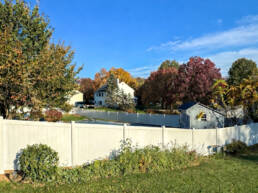
Vinyl Fence Installation
Vinyl fencing is a low-maintenance option for homeowners across Morris, Hunterdon, Somerset, and Warren County who want the look of a classic fence without repainting or staining it every few years. AMR installs vinyl privacy and picket fencing built to the same standard as everything else the company builds. Whether you’re after full backyard privacy or a clean picket line along the front walk, the fence is measured and fitted to your property rather than dropped in from a standard kit.
What AMR Builds
AMR fabricates vinyl gates in its own shop, so gate hardware and fit are handled in-house rather than shipped in and waited on. Vinyl fencing is available in privacy and picket styles, and because AMR builds on-site rather than assembling prefabricated panels, the fence can be adjusted to fit your property’s actual layout instead of forcing a standard panel size onto uneven ground.
Vinyl Fence Styles
- Privacy fencing — solid panels that block sightlines into the yard, a common choice for backyards, patios, and property lines shared with neighbors.
- Picket fencing — the classic look for front yards and gardens, defining the edge of the property without closing it off.
- Matching gates — walk gates and wider gates built to carry the same style as the fence.
Ask your estimator about color and height options during your on-site visit.


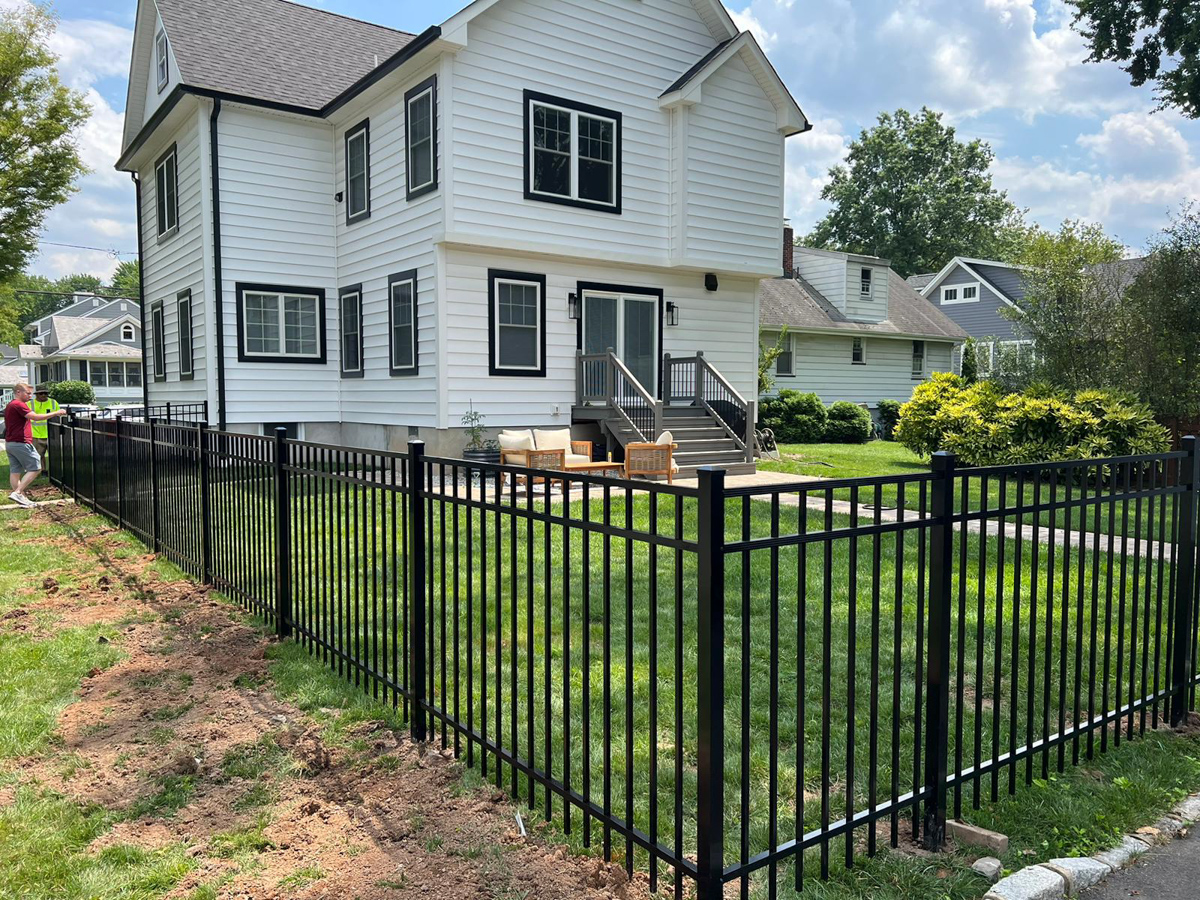

Why It Matters
Vinyl doesn’t need to be painted, stained, or sealed, and it holds up well against New Jersey’s weather swings. If you want a fence that looks the same years from now with essentially no upkeep, it’s a solid option.
How Vinyl Handles New Jersey Weather
This part of New Jersey sees humid summers, freezing winters, and plenty of rain in between. Vinyl doesn’t rot, won’t attract insects, and doesn’t absorb moisture the way wood does, so it avoids the warping and splitting that wear down wood fences over time. Like any material, it has limits. Very cold temperatures can make vinyl less flexible, so a hard impact in the dead of winter is more likely to crack a panel. Proper post setting and installation keep the fence stable through freeze-thaw cycles so the line stays straight season after season.
The Long-Term Value of Low Maintenance
A wood fence usually costs less up front, but the cost doesn’t stop at installation. Staining or sealing every few years takes time or money, and boards eventually need replacing as they weather. With vinyl, most of the cost is paid once. For homeowners who plan to stay in their home for a while, that trade-off often makes vinyl the more practical choice over the life of the fence.
Vinyl vs. Other Fence Materials
- Vinyl vs. wood — wood offers a natural look and can be stained any color, but it needs regular sealing or staining and will eventually weather. Vinyl gives a similar privacy or picket look with almost no maintenance.
- Vinyl vs. aluminum — aluminum is the better choice for open sightlines, pool enclosures, and a more decorative look. Vinyl is the better choice when privacy is the priority.
- Vinyl vs. chain link — chain link is typically the most budget-friendly option for containment, while vinyl offers privacy and a more finished appearance.
Your estimator can help you weigh these options based on what matters most for your yard.
Where Vinyl Fencing Works Best
Vinyl is a strong fit for:
- Backyards where privacy is the main goal
- Patio and outdoor living areas
- Property lines shared with close neighbors
- Front yards and gardens with a picket style
- Homes where the owners want minimal maintenance
Because vinyl comes in clean, uniform finishes, it pairs well with both traditional and newer homes. Many properties also combine materials, using vinyl privacy fencing in the backyard and a more open style like aluminum or picket along the front.
Privacy Fencing and Neighbors
A privacy fence along a shared property line affects the people on both sides of it. Many townships have rules on fence height and how far the fence must sit from the property line, and some require the finished side to face outward. Homeowners associations may also have guidelines on color and style. AMR confirms the rules that apply to your property during the estimate, so the fence is designed within them from the start and there are no surprises once it’s up.
Building Vinyl on Uneven Ground
Uneven yards are common across this part of New Jersey, and they’re where standard vinyl panel installations tend to struggle. A panel set on a slope can leave triangular gaps underneath or a jagged top line. Because AMR builds on-site, the fence can be adjusted to follow the property’s grade, with sections stepped where needed so the top line stays clean and gaps under the fence stay small. The on-site estimate accounts for grade changes before any material is ordered, so the approach is settled before the crew arrives.
Vinyl Gates Built In-House
Vinyl gates take more stress than the fence panels around them, and a gate that isn’t reinforced properly can sag over time. AMR fabricates vinyl gates in its own shop, sizing the frame and hardware to the opening so the gate swings and latches cleanly. Because gates are built in-house, you’re not stuck waiting on a manufacturer shipment, and custom widths for mowers or equipment access aren’t a problem. Gate posts are set to carry the gate’s weight, since a strong gate on a weak post will still sag.
Common Vinyl Fence Problems AMR Avoids
Most of the vinyl fence issues homeowners call about trace back to installation, not the material itself:
- Leaning posts — posts that aren’t set deep or solid enough shift over time, especially after freeze-thaw cycles.
- Sagging gates — vinyl gates without proper internal reinforcement tend to droop and stop latching.
- Gaps on slopes — standard panels forced onto uneven ground leave gaps underneath that pets can slip through.
- Uneven top lines — panels that aren’t adjusted for grade create a jagged look along the fence.
- Loose rails and panels — poor fitting at the posts allows panels to rattle or shift in the wind.
Building on-site and setting every post to carry the fence prevents these problems before they start.
Our Process
- Estimate request. Share your property details and the style you’re considering.
- On-site estimate. AMR confirms measurements and gives you a firm price.
- Contract and scheduling. Once approved, you’re on the schedule — typically two to three weeks out.
- Installation. Most vinyl fence installations are completed in a day or two, with the site cleaned each night.
What Affects the Cost of Vinyl Fencing
Every vinyl fence is priced to the property. The main factors include:
- Total length and height of the fence
- Style, whether privacy or picket
- Number and size of gates
- Grade changes and site conditions
- Removal of an existing fence
Your estimator will walk through the options during the on-site visit so you know where the budget is going before the fence is ordered.
Caring for Your Vinyl Fence
Vinyl needs very little care. A rinse with a garden hose, or a soft brush with mild soap and water, removes most dirt, pollen, and mildew. Avoid harsh abrasives that can dull the finish, and keep string trimmers from scuffing the bottom of the panels. Once or twice a year, check that the gate still latches cleanly and that posts are standing straight. If a panel does get damaged, AMR’s fence repair service can replace individual sections without redoing the whole fence.
Why AMR Fence for Vinyl Fencing
AMR is family-owned and third-generation, and the crew that gives your estimate is trained in-house, the same as every other AMR crew. Every vinyl fence is built by AMR’s own team, from the first post to the final gate adjustment. The company is licensed, bonded, and insured in New Jersey (NJHIC #13VH10878100).
FAQs
No painting, staining, or sealing is needed. Occasional cleaning is typically all that’s required to keep it looking new.
An on-site estimate accounts for grade changes before the fence is built — ask your estimator to walk the property with you if slope is a concern.
Both privacy and picket styles are available. Ask your estimator about color and height options during your on-site visit.
In many cases, yes, as long as the fence and gates meet your township’s pool enclosure requirements. See our pool fence installation page for more details.
Most vinyl fence installations are completed in a day or two once the job is on the schedule.
Yes. Individual panels or sections can usually be replaced without redoing the entire fence.