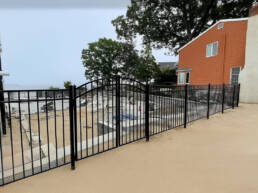
Aluminum Fence Installation
Every aluminum fence is laid out on-site and installed by AMR’s own crew, from the first post to the last gate. Before anything is ordered, your estimator walks the fence line to plan around sloped yards, uneven grading, and odd property lines, which are common across Morris, Hunterdon, Somerset, and Warren County. That planning keeps the finished fence from ending up with awkward gaps or uneven sections.
What AMR Builds
AMR doesn’t install pre-fabricated panels. Every aluminum fence is built on-site, which means it follows the actual shape of your yard instead of forcing your property to match a standard panel size. That matters more than it sounds like it would — sloped yards, uneven grading, and odd property lines are common across Morris, Hunterdon, Somerset, and Warren County, and panel systems tend to leave awkward gaps or stair-stepped sections in those spots. A built fence doesn’t.
You can choose from a range of styles and finishes, including black and other color options, and AMR will walk you through what fits your property before anything gets ordered.
Style and Color Options
- Flat-top or spear-top rail styles — a cleaner, more contemporary look versus a traditional finial top
- Black, bronze, and other powder-coat finishes — black is the most requested, but AMR can source other colors depending on the manufacturer
- Puppy-guard picket spacing — tighter vertical spacing near the bottom rail for properties with small dogs
- Multiple height options — from 3-foot yard fencing up to 6-foot options where privacy or containment is the priority
A Note on Local Restrictions
Not every style is a fit for every property or township — some municipalities restrict height or spacing near the front yard setback. Your estimator will flag anything relevant to your specific lot during the on-site visit, rather than leaving you to guess after the fact.
Why Aluminum
Aluminum doesn’t rust, doesn’t need to be painted or stained, and won’t warp the way wood can over time. It’s a strong choice if you want a fence that looks the same in ten years as it does on installation day, without a maintenance routine attached to it.
A few reasons homeowners in this area consistently land on aluminum over other materials:
- Weather resistance. New Jersey winters bring salt, freeze-thaw cycles, and moisture that wear down wood and corrode lower-grade metal. Aluminum shrugs most of that off.
- No repainting or staining. Unlike wood, there’s no multi-year maintenance cycle to plan around.
- Open sightlines. Aluminum keeps a yard feeling open rather than boxed in, which matters for smaller residential lots or anyone who wants to keep an eye on kids or pets without a solid barrier.
- Long-term value. It holds its appearance and structural integrity well past what most homeowners keep a property, which matters at resale.
- Lighter footprint than iron. Aluminum delivers a similar formal look to ornamental iron without the weight, cost, or rust risk that comes with ungalvanized iron over time.
How Aluminum Compares to Other Materials
Homeowners often narrow their decision down to aluminum and one other material. A quick comparison of where each one tends to win:
- Aluminum vs. wood. Wood gives you full privacy and a warmer look, but needs periodic staining or painting. Aluminum trades that privacy for essentially zero maintenance.
- Aluminum vs. vinyl. Vinyl also needs little upkeep and offers full privacy, which aluminum doesn’t. Aluminum is the lighter, more open-feeling option of the two.
- Aluminum vs. chain link. Chain link is typically the most budget-friendly option for pure containment, but aluminum offers a more finished, residential appearance for a similar open-sightline function.
There’s no universally “better” choice here — it comes down to whether privacy, budget, or appearance is driving the decision, which is exactly what your estimator will help you sort through on-site.
Where Aluminum Fencing Works Best
Aluminum isn’t the right call for every situation — full privacy is the main tradeoff — but it’s a strong fit for most of the residential projects AMR sees across the service area:
- Front yards, where an open, finished look matters more than blocking visibility
- Backyards where visibility to a pool, garden, or play area is a priority rather than a drawback
- Full-perimeter jobs on larger properties, where the cost and weight of a solid material like wood or vinyl adds up fast
- Pool enclosures, where aluminum is a common, code-friendly option — see our pool fence installation page for the specific safety requirements that apply


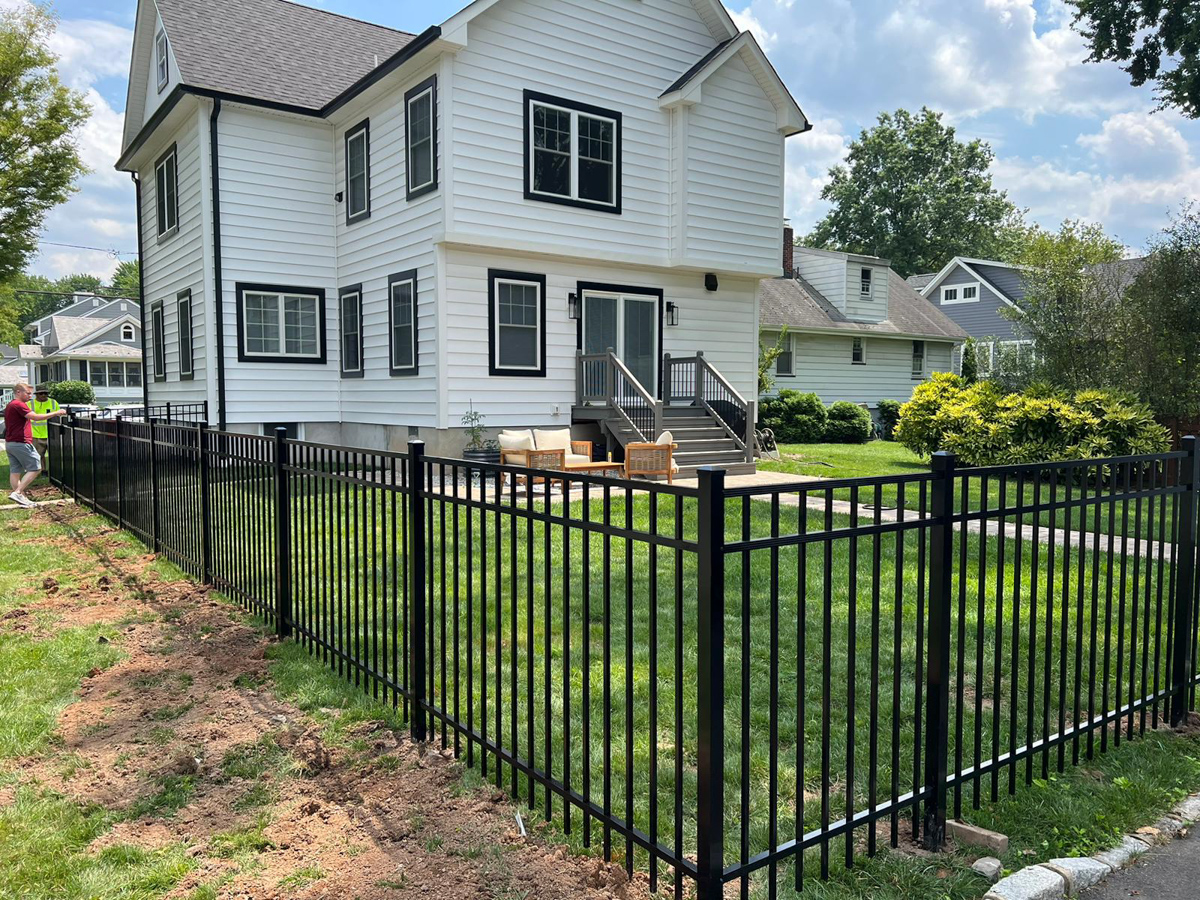

Our Process
AMR runs the same process on every aluminum fence job, from a single backyard section to a full-property perimeter:
- Call or request an estimate. AMR gets your property information and schedules a time to come out — usually within a week to a week and a half during the season.
- On-site estimate. The owner or an estimator walks your property, confirms measurements against what was submitted online, and gives you a firm price. This is also when style, height, and color get finalized.
- Contract and scheduling. Once you sign off and put down a deposit, you’re scheduled — typically a two-to-three-week lead time, longer during peak spring and summer months.
- Installation. Most aluminum fence jobs are completed within a day or two, and the crew cleans the site before leaving each night, not just at the end of the job.
What Affects Your Aluminum Fence Cost
Every property is different, so pricing isn’t one-size-fits-all — but a few factors tend to drive most of the variation from job to job:
- Total linear footage. More fence line means more material and labor, regardless of style.
- Height and picket spacing. Taller sections and tighter puppy-guard spacing use more material per foot.
- Gates. Each gate adds hardware, hinges, and additional fabrication time, especially for wider drive gates.
- Site conditions. Slopes, rocky soil, tree roots, or hard-to-access areas can add time to post-setting.
- Permitting. Some townships require a permit for fence installation, which AMR can pull on your behalf for an added processing fee.
Your estimator will walk through exactly which of these apply to your property during the on-site visit, so the number you’re given is a firm price, not a rough range.
Caring for Your Aluminum Fence
One of the reasons homeowners choose aluminum is how little it asks of you after installation, but a few basic habits keep it looking new for longer:
- Rinse it occasionally. A garden hose is usually enough to clear dirt, pollen, or road salt buildup.
- Check gate hardware once a year. Hinges and latches are the only moving parts, and a quick check keeps them from binding.
- Touch up scratches early. Powder-coat finishes resist chipping, but if a scratch does happen, addressing it early prevents any exposed metal from corroding.
- Keep vegetation trimmed back. Vines and overgrowth can trap moisture against the rails over time.
Why AMR Fence for Your Aluminum Fence
AMR is a third-generation, family-owned fence company — no franchise, no subcontractors. The crew is trained in-house, and the foreman running your job has more than two decades of hands-on experience. AMR is also licensed, bonded, and insured in New Jersey (NJHIC #13VH10878100), which means you’re covered if anything goes wrong.
Because AMR fabricates its own wood sections and vinyl gates in its Washington, NJ shop, there’s rarely a wait on manufacturer shipments for related gate or trim work — which keeps aluminum installs on schedule even when a project includes mixed materials.
FAQs
Most residential aluminum fence installations are completed in one to two days, depending on the length of the fence and site conditions.
Often, yes. AMR handles permit pulling for an added processing fee, so you don’t have to deal with your township directly. Ask your estimator whether your project needs one.
Yes. Your estimator will walk the fence line and recommend whether sections should follow the slope or step down it, depending on the grade and the style you choose.
Yes. See our pool fence installation page for pool-specific code and safety details.
No. Aluminum doesn’t rust the way steel or iron can, which is one of the main reasons it holds up so well in New Jersey’s humidity and winter salt exposure.
Yes — it’s common to pair aluminum for the main perimeter with wood or vinyl for a private backyard section. Your estimator can plan this out during your on-site visit.