Cedar & Wood Fence Installation
A wood fence still does something no other material quite matches — warmth, a classic look, and real privacy. AMR builds cedar and wood fencing for homeowners across Morris, Hunterdon, Somerset, and Warren County who want that look without cutting corners on how it’s built.
What AMR Builds
AMR’s cedar fencing is naturally resistant to insects and decay, and the sections are built in AMR’s own Washington, NJ shop rather than ordered from a supplier. That means your fence is made to the style, height, and board spacing you chose, not whatever a manufacturer has in stock. The same crew that builds the sections installs them, so one team handles fit and quality from start to finish.
Options include privacy-style solid fencing, picket fencing, and split rail, in cedar or other wood species depending on what you’re looking for.
Wood Fence Styles
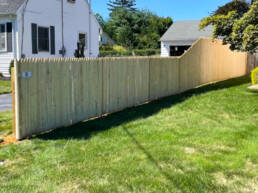
- Privacy fencing. Solid, tightly-spaced boards that block sightlines completely — the most requested style for backyards.
- Picket fencing. Spaced boards, typically shorter, for a classic front-yard look that defines a property line without blocking it.
- Split rail. Open, horizontal-rail construction common on larger or rural properties, more about marking a boundary than creating privacy.
- Shadowbox. Boards alternated on either side of the rail, giving a finished look from both sides of the fence — a common choice when the fence borders a shared property line.



Wood Species Options
Cedar is the most common choice AMR installs, largely because it’s naturally resistant to insects and decay without needing chemical treatment. Depending on the look and budget you’re working with, other wood species are available as well. Your estimator can walk through the tradeoffs in appearance, cost, and long-term maintenance between species during your on-site visit.
Wood vs. Vinyl: A Quick Comparison
Homeowners deciding between wood and vinyl privacy fencing are usually weighing the same two things: appearance and upkeep. Wood gives a natural, warmer look that most people picture when they think of a classic backyard fence, but it needs periodic staining or sealing to hold that appearance. Vinyl matches wood on privacy and needs essentially no upkeep, but has a more uniform, manufactured look that isn’t the right fit for every property style. Neither is objectively the better choice — it comes down to whether the natural wood appearance is worth the maintenance tradeoff for your property, which your estimator can help you think through.
Why It Matters
Wood is the material most people picture when they think “fence” — and for good reason. It’s warm, it’s classic, and it genuinely improves how a property looks from the street. The tradeoff is that it needs to be built well from the start, because a poorly-fitted wood fence shows its flaws faster than most other materials.
Where Wood Fencing Comes Up Short — and Where It Doesn't
Wood isn’t the lowest-maintenance option AMR offers — aluminum and vinyl both ask less of a homeowner over time. But for properties where the priority is full privacy and a natural appearance, wood remains the standard other materials get compared against. It’s a tradeoff worth being upfront about rather than glossing over.
Where Wood Fencing Works Best
- Backyards where full privacy is the priority, not just a boundary marker — this is where wood sees the most residential demand across our service area
- Front yards, typically with picket-style fencing that defines the property line without closing it off from the street
- Rural and larger properties, where split rail marks boundaries across more acreage without the material cost of a solid privacy fence
- Shared property lines, where a shadowbox style gives both neighbors a finished-looking side rather than one side facing exposed framing
Common Wood Fence Installation Mistakes
A wood fence’s biggest failure points almost always trace back to how it was installed, not the material itself. A few things AMR’s process is specifically built to avoid:
- Posts set too shallow. A post that isn’t set deep enough — especially below the frost line in this region — will heave or lean within a few winters.
- Ignoring the actual grade. Fences built to a straight line rather than the yard’s real slope end up with gaps at the bottom or boards that don’t sit flush.
- Inconsistent board spacing. Uneven gaps are one of the fastest ways a fence starts looking unfinished, even when the materials themselves are high quality.
- Skipping proper fasteners. Standard fasteners can corrode and stain wood over time; the right hardware avoids streaking and loosening.
Our Process
- Estimate request. Share your property details and what you’re looking for — privacy, picket, split rail.
- On-site estimate. AMR measures your property and confirms the details against what was submitted.
- Contract and scheduling. Once approved, you’re scheduled — typically two to three weeks out.
- Installation and cleanup. Most wood fence jobs take one to two days. The crew clears debris from the site every night, not just when the job wraps.
What Affects Your Wood Fence Cost
- Total linear footage. Longer fence lines mean more material and labor time, regardless of style.
- Style. Privacy fencing generally uses more material per foot than picket or split rail, which affects overall cost.
- Height. Taller privacy sections require more lumber and additional bracing.
- Old fence removal. If an existing fence needs to come out first, that adds time and disposal cost to the project.
- Gates. Each gate adds hardware and framing beyond the standard fence line cost.
Your estimator walks through which of these apply to your property and gives you a firm number, not a rough range, before anything is scheduled.
Caring for Your Wood Fence
Wood asks more of a homeowner over time than aluminum or vinyl, but the upkeep is manageable with a basic routine:
- Stain or seal every few years. This is the single biggest factor in how long a wood fence keeps its color and resists weathering.
- Check for loose boards or fasteners annually. Catching a loose board early prevents it from warping or splitting further.
- Keep soil and mulch from piling against the bottom rail. Constant moisture contact is one of the most common causes of premature rot at the base of posts and boards.
- Trim vegetation growing against the fence line. Vines and overgrowth trap moisture against the wood and accelerate wear.
Why AMR Fence for Wood & Cedar Fencing
AMR fabricates its own wood sections in its Washington, NJ shop — not shipped in from a supplier, built there. That in-house fabrication is part of how the crew avoids waiting on manufacturer lead times for custom sections. The company is family-owned and third-generation, with a crew trained in-house and never subcontracted out.
Because the same crew that fabricates the sections also installs them, there’s direct accountability for fit and quality at every step — rather than a gap between whoever built the components and whoever’s putting them in the ground. That in-house control extends to gates and custom trim work too, so a nonstandard gate width or an unusual property line doesn’t turn into a delay waiting on an outside supplier.
FAQs
Yes. AMR builds its wood fence sections in its Washington, NJ shop, so they’re made to your chosen style and height instead of coming off a supplier’s shelf.
Yes — since AMR builds wood fencing board by board rather than from pre-made panels, it follows your yard’s actual grade instead of stepping down it in blocks.
Typically one to two days for a standard residential job, depending on length and site conditions. If an old fence needs removal first, add another day or two.
AMR’s cedar fencing is naturally resistant to insects and decay, so pressure treatment usually isn’t required — ask your estimator about the specific wood species for your project.
It depends on sun exposure and weather conditions, but every two to three years is a reasonable baseline for most properties in this region.
Yes — cedar is AMR’s most common recommendation, but other species are available depending on your budget and the look you’re after. Your estimator can walk through the options.