
Deer Fence Installation
Deer damage is a real headache for rural and wooded properties across Morris, Hunterdon, Somerset, and Warren County — gardens stripped overnight, landscaping ruined, headlights catching eyes at the treeline every evening. AMR builds deer fencing designed to actually solve that, not just slow it down. Whether you’re protecting a vegetable garden, a young orchard, or a few acres of landscaping you’ve spent years establishing, the fence is planned around what you’re protecting and how deer are actually reaching it.
What AMR Builds
Deer fencing has different requirements than a standard residential fence. Height is the first thing that matters — deer can clear a fence that would stop most other animals without much effort, so a fence that isn’t tall enough just doesn’t work. Deer fencing is installed post by post in the field, which matters on wooded and rural properties, where tree roots, slopes, and uneven clearing lines are the norm rather than the exception. A fence assembled from standard panels doesn’t adapt to any of that; a built fence does.
Built for Wooded and Rural Terrain
Deer fencing rarely runs across a flat, open lawn. It follows tree lines, crosses drainage swales, climbs hillsides, and works around rock outcroppings that show up constantly in this part of New Jersey. Building on-site lets the crew adjust post spacing around roots and stone, keep the bottom of the fence tight to the ground through dips and rises, and hold a consistent height across changing grade — the details that decide whether deer find a way through.


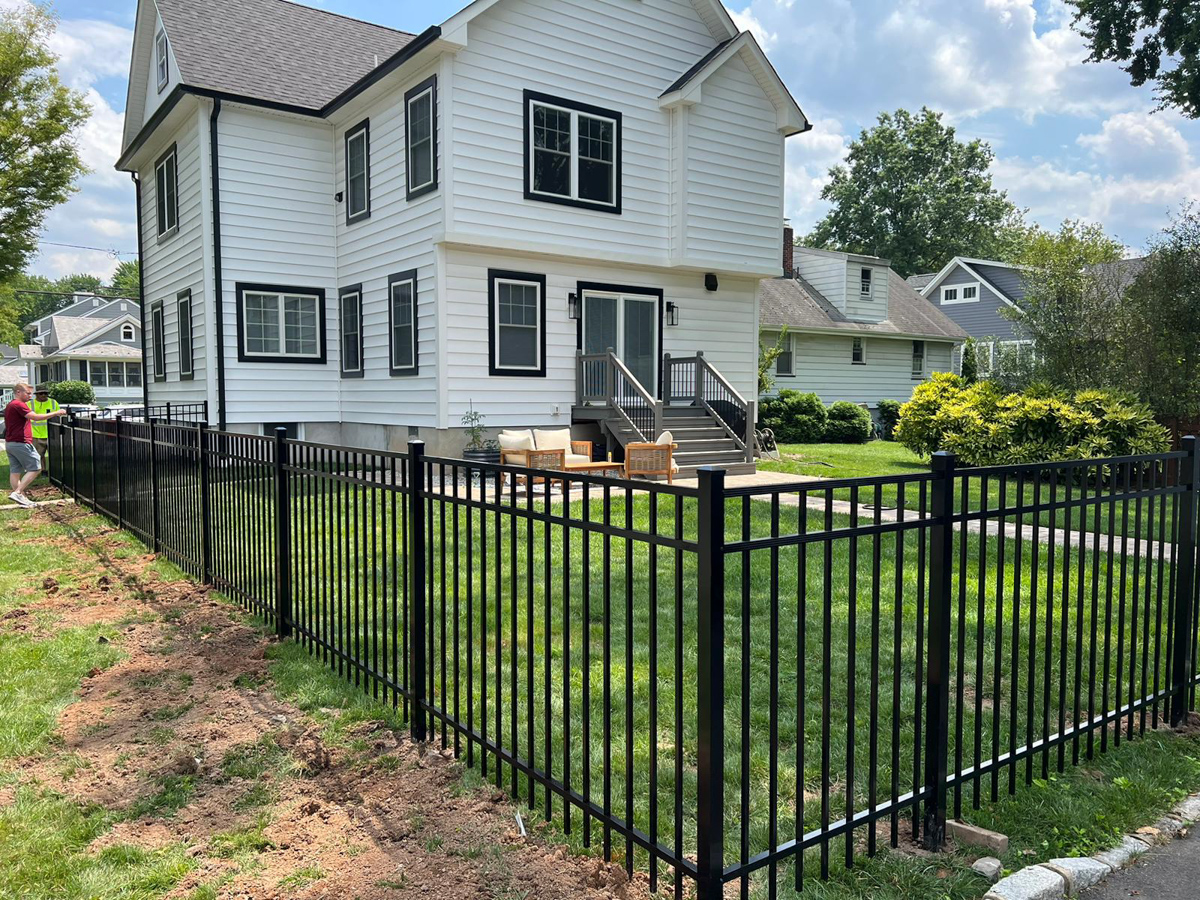

Types of Deer Fencing
Not every property needs the same setup:
- Woven wire mesh — a common, cost-effective option for marking a perimeter and discouraging deer without a heavy visual footprint.
- Welded wire fencing — sturdier and longer-lasting than woven mesh, often used where the fence needs to hold up to more pressure.
- Combination fencing — deer fencing paired with a more decorative material near the house, with the taller deer barrier set back along the tree line or garden edge.
Your estimator will walk through which setup fits your property and what you’re actually trying to protect.
Choosing Between Woven and Welded Wire
Woven mesh is lighter and blends into wooded backgrounds, which makes it a good fit for long perimeter runs where appearance and budget both matter. Welded wire holds its shape better under pressure from animals, falling branches, and snow load, so it tends to be the better choice around high-value plantings or in spots where deer have already tested the edge. Some properties use both, with welded wire around a garden and woven mesh along the outer boundary.
Pairing Deer Fencing With a Finished Look
Near the house, a tall wire fence isn’t always what homeowners want to look at. Combination layouts solve that by keeping a more finished fence — such as wood and cedar or aluminum — close to living areas while the taller deer barrier runs along the back of the property. The result protects the yard without making the house feel fenced in.
When Deer Fencing Makes the Most Sense
Deer pressure tends to spike in spring and summer, when new growth in gardens and landscaping draws them in — that’s usually when people notice the damage and start looking for a real fix. A full property perimeter isn’t always necessary; sometimes fencing off a garden or a specific problem area does the job without fencing the whole property. It’s worth discussing what you’re actually trying to protect during your estimate, since that changes both the layout and the cost.
Why Sprays and Netting Usually Fall Short
Most homeowners try repellent sprays, motion sprinklers, or plastic netting before they call about a fence. Those can buy some time, but repellents wash off in rain and need constant reapplication, deer get used to scare devices, and netting tears, sags, and tangles in brush. A properly built fence is a physical barrier that works every night of the year without anyone having to remember to maintain it, which is why it’s the long-term fix most people end up with.
Full Perimeter vs. Targeted Enclosures
A full perimeter makes sense when deer are moving through the whole property, or when landscaping is spread out across the yard. A targeted enclosure makes more sense when the damage is concentrated in one area, like a vegetable garden, a set of fruit trees, or a newly planted bed. Enclosures cost less and go in faster, while a perimeter gives broader protection and keeps deer off the property entirely.
Where Deer Fencing Works Best
AMR installs deer fencing on a range of properties, including:
- Vegetable and kitchen gardens
- Orchards and fruit trees
- Newly planted landscaping and young trees
- Wooded residential lots bordering open space
- Small farms, hobby farms, and acreage
- Nurseries and growing areas
- Properties along preserved land or state forest edges
Common Deer Fencing Mistakes
Deer are persistent, and they’ll find the weak spot in a fence that wasn’t planned carefully. The problems AMR sees most often on existing installations:
- Fences that are too short — a fence that deer can clear with a running start only teaches them to jump.
- Gaps under the fence — deer will push under a loose bottom edge as readily as they’ll jump over the top.
- Gates left as weak points — a gate that doesn’t close tight, or one that’s lower than the fence, becomes the entry point.
- Light-duty posts on long runs — flimsy posts lean and sag over time, especially after snow and storms, and a sagging fence stops working.
Getting these right from the start is far cheaper than chasing deer through a fence that’s already up.
Our Process
- Estimate request. Tell AMR what you’re protecting and roughly how much ground needs to be covered.
- On-site visit. Deer fencing often runs across long, irregular property lines, so an in-person look matters here more than on a standard job.
- Firm quote and scheduling. Once approved, you’re on the schedule — typically two to three weeks out.
- Installation. The same in-house crew that builds every AMR fence handles it, start to finish.
What Affects the Cost of Deer Fencing
Deer fencing is priced to the property, and a few factors drive most of the number:
- Total length of the fence line
- Material choice — woven mesh, welded wire, or a combination layout
- Terrain — slopes, rock, roots, and clearing work along wooded lines
- Number and type of gates, including wide gates for equipment or vehicles
- Full perimeter vs. targeted enclosure
Your estimator will lay out the options so you can decide where coverage matters most.
Caring for Your Deer Fence
Deer fencing needs very little maintenance, but a walk of the fence line a couple of times a year pays off. Look for fallen branches resting on the wire, sections where the bottom edge has lifted after heavy rain, and gates that have started to sag. After a major storm, check tree-line sections first, since that’s where damage usually shows up. AMR can repair damaged sections without replacing the whole run.
Why AMR Fence for Deer Fencing
This work pairs naturally with our ranch & horse fencing — both come from the same rural, acreage-heavy part of AMR’s business. The crew is trained in-house and builds every job start to finish, so the same standard applies whether it’s a backyard privacy fence or several hundred feet of deer fencing along a tree line. AMR is licensed, bonded, and insured in New Jersey (NJHIC #13VH10878100).
FAQs
Deer can clear fences that stop most other animals, so height matters more here than on a standard fence. Ask your estimator to confirm the right height for your property and what you’re protecting.
Yes. Deer fencing is installed post by post, so it can follow uneven, wooded, or sloped terrain.
Not necessarily. Many properties only need a garden or a specific problem area fenced off. Talk through your goals with your estimator to figure out the right scope.
It depends on the material and mesh size. Deer fencing can also discourage some other wildlife, and your estimator can talk through options if rabbits, groundhogs, or other animals are part of the problem.
Requirements vary by township, especially for taller fences. AMR confirms what applies to your property as part of the estimate.
Before spring growth is ideal, since that’s when deer pressure picks up. That said, deer fencing can be installed most of the year, and it’s never too late to stop ongoing damage.