Railing Installation
Railing isn’t always the main project — sometimes it’s the piece that finishes one. AMR installs deck, stair, and porch railing across Morris, Hunterdon, Somerset, and Warren County, installed by the same in-house crew as every other AMR project. Whether you’re replacing a wobbly railing on an older deck, adding handrails to a set of front steps, or finishing a new porch, the railing is measured and built for the structure it’s going on.
What AMR Builds
Railing has to be functional first: sturdy enough to lean on, code-compliant for height and spacing, and properly anchored. AMR builds railing to fit the specific structure it’s going on rather than working from a one-size setup, since decks, stairs, and porches rarely follow a standard measurement.
Types of Railing
- Deck railing — perimeter railing for raised decks, built to carry weight and keep people safely back from the edge.
- Stair railing — railing and handrails for deck stairs, porch steps, and exterior staircases, fitted to the actual stair angle.
- Porch railing — railing that finishes a front or back porch and matches the look of the house.
- Entry and walkway handrails — graspable handrails for front steps and short runs of stairs, where a secure grip matters most.
Your estimator will walk through which setup fits the structure and how you use it.



Why It Matters
A loose or poorly-anchored railing isn’t just an eyesore — it’s a real safety issue. AMR treats railing installation with the same standard applied to fencing: proper materials, correct spacing, and a finish that holds up over time.
Signs Your Railing Needs Replacing
- Posts that wobble or shift when you lean on them
- Loose or missing balusters
- Rust, rot, or cracking at the posts or where the railing connects to the structure
- Handrails that aren’t continuous or are hard to grip
- Railing that’s lower than it should be, often on older decks built to outdated standards
If you notice any of these, it’s worth having the railing looked at before someone leans on it.
Railing Materials
Aluminum is a common choice for railing because it’s low-maintenance, durable, and doesn’t rot, warp, or need staining. It works well on decks, porches, and stairs, and it pairs naturally with aluminum fencing when you want a consistent look across the property. Your estimator can talk through material, style, and color options during the on-site visit, including what will best match your deck, your house, and any existing fence.
Choosing a Railing Style
Railing is one of the most visible parts of a deck or porch, so style matters. Traditional picket-style railing with vertical balusters is the most common choice and suits nearly any house. Simpler, cleaner profiles work well on modern homes, while more decorative post caps and accents suit traditional or historic architecture. Color is part of the decision too, since black, bronze, and white railing each change how a deck reads from the yard. Your estimator can show options during the visit so you can see what fits the house.
Railing Code Basics
Railing requirements depend on the height of the structure and what the railing is protecting, and they can vary by township. In general, codes address:
- Railing height — how tall the railing must be on decks, porches, and stairs.
- Baluster spacing — how far apart balusters can be, so a small child can’t slip through.
- Load strength — how much force the railing and posts need to withstand.
- Handrail graspability — the shape and size of handrails on stairs, so they can actually be gripped.
- Continuity — handrails that run the full length of the stairs without breaks.
AMR confirms the requirements that apply to your project during the on-site visit, so the railing is built to meet them from the start.
Stair Railing Done Right
Stairs are where off-the-shelf railing most often falls short. Every stair run has its own angle, and a railing that doesn’t match it leaves uneven gaps, awkward transitions at the top and bottom, and handrails that don’t feel right under your hand. AMR measures each stair run and builds the railing to follow the actual rise and run, with a continuous handrail that’s easy to grip from the first step to the last. Transitions at landings and at the top of the stairs are fitted on-site, so the railing reads as one clean line instead of a series of pieces bolted together.
Getting Railing Installed
Most railing jobs start with a call describing what needs railing — a deck, a set of stairs, a porch — and roughly when you’re looking to get it done. AMR schedules an on-site look to measure the structure and confirm code requirements before anything’s quoted. Because railing projects are typically smaller than a full fence install, they often move faster once scheduled.
Our Process
- Initial call. Tell AMR what needs railing and roughly when you’d like it done.
- On-site measurement. An estimator measures the structure, checks the condition of posts and attachment points, and confirms code requirements.
- Quote. You get a clear written quote covering materials, style, and scope.
- Fabrication and installation. Railing components are built to your measurements, and the in-house crew anchors and installs them.
- Final check. Every section is checked for strength, spacing, and fit before the job is signed off.
The In-House Advantage
Off-the-shelf railing kits come in fixed sizes, which doesn’t work well on a lot of older decks and stairs that weren’t built to a standard measurement. AMR fabricates railing components rather than relying exclusively on pre-made kits, so an odd stair angle or a non-standard deck edge doesn’t turn into a problem. The same in-house crew that builds AMR’s fences builds its railing, and the company is licensed, bonded, and insured in New Jersey (NJHIC #13VH10878100).
Working With Older Decks and Porches
Older structures often come with surprises: out-of-square corners, uneven stair treads, posts that have shifted over the years, or framing that wasn’t built with modern railing in mind. AMR looks at how the railing will attach to the structure before quoting, because a railing is only as strong as what it’s anchored to. If the deck or porch framing needs attention at the attachment points, your estimator will let you know up front rather than after the work has started.
Matching Railing to Your Fence
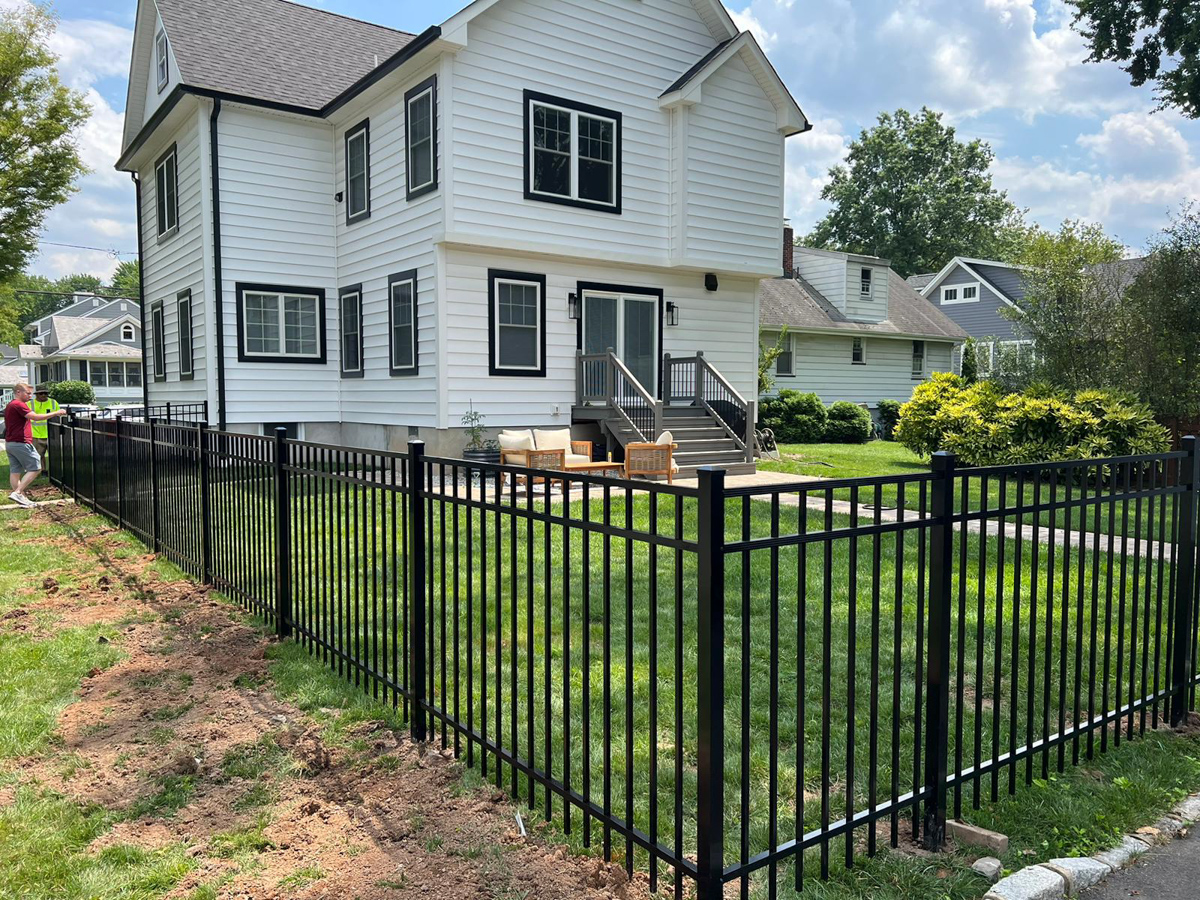
If you already have an AMR fence, or you’re planning one, railing can be matched to it so the deck, porch, and yard feel like one design. Matching colors, picket styles, and post caps tie everything together, especially where a deck stair lands in a fenced yard. Mention your existing fence during the estimate so AMR can plan for a consistent look.
Railing That Finishes a Bigger Project
Railing often comes up in the middle of another project. A new fence goes in and the deck stairs that land in the yard suddenly need a railing that matches. A porch gets refreshed and the old railing no longer fits the look. Because AMR handles fencing, gates, and railing with the same crew, those pieces can be planned and installed together instead of coordinating separate projects on different schedules.
What Affects the Cost of Railing
Every railing job is priced to the structure. The main factors include:
- Total length of railing
- Number of stair runs and handrails
- Material, style, and color
- Condition of the existing posts and attachment points
- Removal of existing railing
Your estimator will walk through where the budget goes, so there are no surprises when the quote arrives.
Keeping Your Railing in Good Shape
Aluminum railing needs very little upkeep. Rinse it occasionally to remove dirt and pollen, and check once or twice a year that posts are still tight and no fasteners have worked loose. After a harsh winter, take a quick look at stair railings and handrails, since they see the most use. Tightening hardware early keeps a railing solid for years.
FAQs
Yes — aluminum is a common choice for its low maintenance and durability.
Ask your estimator during your on-site visit — AMR’s workmanship warranty terms are the same standard applied across projects.
In many cases, yes. Bring it up during your estimate so AMR can plan for a consistent look.
Yes. AMR can remove old railing and install new railing on an existing deck or porch, as long as the structure is sound at the attachment points.
Yes. Handrails for entry steps and short stair runs are a common railing job.
Railing projects are typically smaller than full fence installations and often move faster once scheduled. Your estimator will give you a timeline for your specific job.