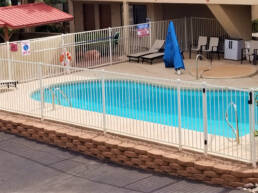
Pool Fence Installation
A pool needs a fence that does two things at once: keeps it safe and doesn’t ruin the look of your backyard. AMR installs pool fencing across Morris, Hunterdon, Somerset, and Warren County in aluminum, vinyl, or ornamental iron, built to meet local safety requirements without feeling like an afterthought. Whether you’re putting in a new pool or upgrading the fence around an existing one, the enclosure is planned around your pool, your yard, and your township’s rules.
What AMR Builds
Pool fencing has to meet specific height and gate requirements — self-closing, self-latching gates are standard practice around pools, and spacing between pickets matters for keeping young children out. AMR builds the fence to fit your yard’s actual layout around the pool, not a generic rectangle. Aluminum fencing is a common material choice here for its durability near water and low maintenance, though vinyl and iron are also options depending on the look you want.
Pool Fence Materials
- Aluminum — the most popular pool fence material, rust-resistant, low-maintenance, and open enough to keep the pool visible from the house.
- Ornamental iron — a more formal, substantial look for pools that sit near the front of the property or alongside traditional architecture.
- Vinyl — a solid or semi-private option for homeowners who want more screening around the pool area.
Your estimator will walk through how each material works with your yard, your pool, and your township’s requirements.



Why It Matters
This isn’t a fence you install just to check a box — it’s what stands between an open pool and a backyard full of people, including kids who aren’t yours. Getting the gate hardware and spacing right isn’t optional.
A Fence Is One Layer of Protection
A pool fence works best as part of a larger safety picture that includes adult supervision, locked doors and gates, and swimming skills. What the fence does is buy time. It keeps a young child who wanders out of the house, or a neighbor’s kid who comes over uninvited, from reaching the water in seconds. That’s why every detail, from the gap under the fence to the latch on the gate, gets treated as a safety issue rather than a cosmetic one.
Pool Fence Requirements to Know
Pool enclosure rules vary by municipality, but most cover the same basic points:
- Minimum fence height — the fence has to be tall enough that a child can’t easily climb over it.
- Self-closing, self-latching gates — gates must close and latch on their own every time, without anyone having to push them shut.
- Latch placement — latches are typically mounted high enough to be out of a young child’s reach.
- Picket spacing — openings between pickets need to be narrow enough that a child can’t slip through.
- Gaps at the bottom — the space between the ground and the bottom of the fence is limited, so a child can’t crawl under.
- Climbable features — horizontal rails and nearby objects that could act as footholds are restricted.
AMR confirms your township’s specific requirements during the on-site visit, so the fence is designed to pass from the start.
Insurance Considerations
Township code isn’t the only reason to get pool fencing right. Many homeowners insurance providers have their own expectations for pool enclosures, and some may ask about fencing and gates when a pool is added to a policy. It’s worth checking with your insurer before the fence goes in, so the enclosure meets both your township’s requirements and your policy’s.
Pool Gates Done Right
The gate is the most important part of any pool fence, and it’s where most enclosures fail. A gate that drifts open, doesn’t latch on its own, or sags over time leaves the pool exposed even when the rest of the fence is perfect. AMR builds pool gates with hardware rated for the gate’s weight and tests self-closing and self-latching function before the job is signed off. Gates can be sized for simple foot traffic or widened for pool equipment and maintenance access.
Designing a Pool Fence That Looks Good
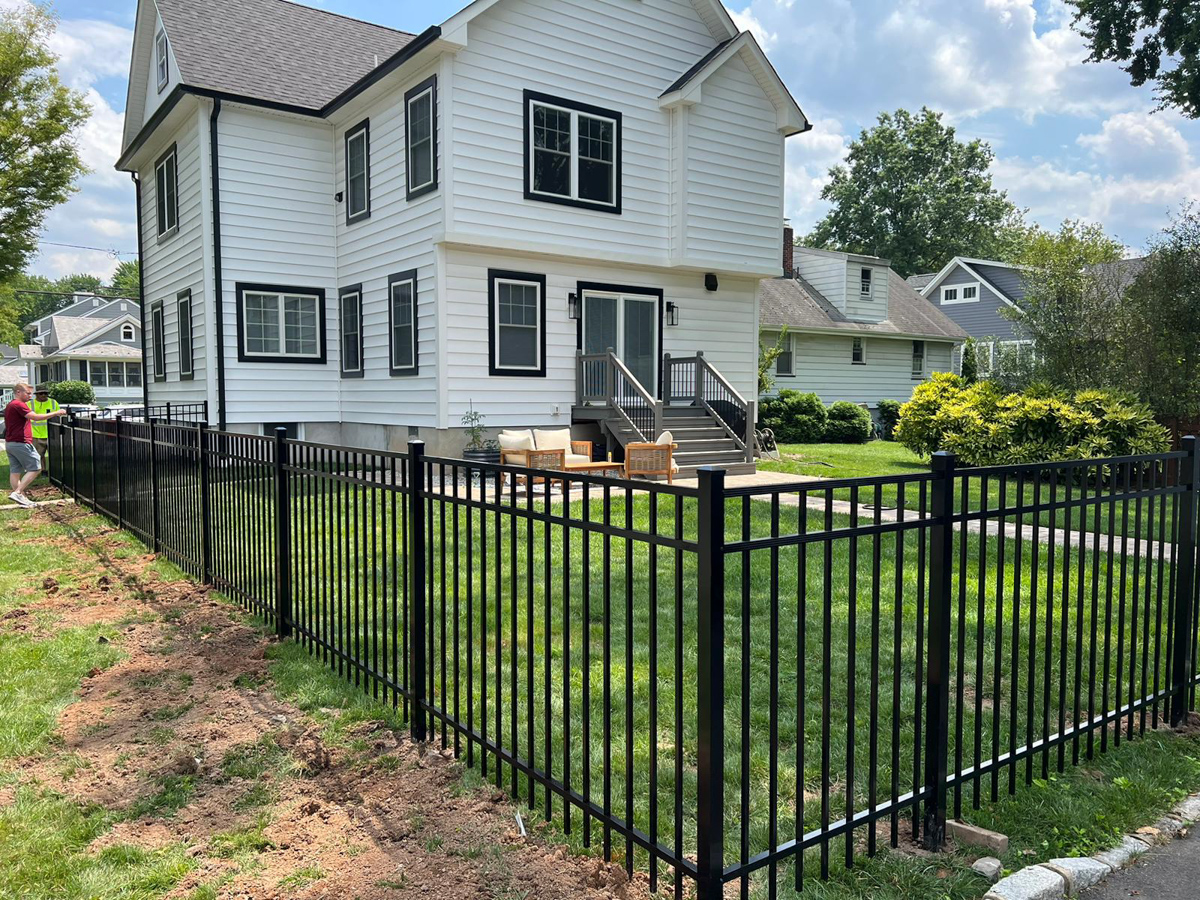
A pool fence doesn’t have to feel like a barricade. Open-picket materials like aluminum and ornamental iron keep sightlines to the water clear, which is important for supervision and makes the yard feel open. Because every enclosure is laid out on-site around your pool, the fence can work around patios, landscaping, and the pool’s shape instead of cutting a hard rectangle through the yard. Colors and styles can also be chosen to match an existing fence or the home itself. The goal is an enclosure that looks like a planned part of the backyard, not something added after the pool went in.
Enclosing the Pool vs. the Whole Yard
Some homeowners enclose only the pool area, while others use the backyard perimeter fence as part of the pool barrier. Enclosing just the pool keeps the rest of the yard open and adds a dedicated layer of protection. Using the perimeter can work too, but every door, gate, and section along that line has to meet pool requirements. Your estimator will talk through which approach fits your yard and what your township allows.
What to Expect
A pool fence estimate starts with a conversation about your pool’s shape and your yard layout — irregular pool shapes are common, and the fence needs to follow the pool’s actual footprint, not a rough approximation. An on-site visit confirms measurements and walks through your township’s specific code requirements, since these vary by municipality. From there, scheduling follows AMR’s standard timeline, and the crew builds the enclosure tight against your yard’s actual boundaries.
Our Process
- Initial conversation. Tell AMR about your pool, your yard, and the look you’re after.
- On-site visit. An estimator confirms measurements, reviews your township’s pool enclosure requirements, and walks through material and gate options.
- Quote and permitting. You get a clear written quote, and AMR can handle permit processing for an added fee if your project needs it.
- Installation. The in-house crew builds the enclosure on-site, fitting it to your pool’s shape and your yard’s grade.
- Gate testing and walk-through. Self-closing and self-latching function is tested before the job is signed off.
Permits and Inspections
Many New Jersey townships require a permit for pool fencing, and some require an inspection once the fence is complete. AMR offers permit processing for an added fee, which takes the paperwork off your plate. If your pool is new, the fence often needs to be in place and approved before the pool can be used, so it’s worth planning the fence early in the pool project rather than at the end.
What Affects the Cost of a Pool Fence
Every pool fence is priced to the yard. The biggest factors include:
- Total length of the enclosure
- Material and style
- Number of gates and gate hardware
- Pool shape and yard layout
- Grade changes and site conditions
- Permit processing, if needed
Keeping Your Pool Fence Safe
A pool fence only protects the pool if it keeps working the way it was installed. Check the gate regularly to make sure it still closes and latches on its own from any position. Keep chairs, planters, grills, and pool equipment away from the fence so they can’t be used to climb over it. Watch for soil washing out under the fence and for loose pickets or hardware. If anything stops working, AMR’s fence repair service can get the enclosure back to where it needs to be.
Why AMR Fence for Pool Fencing
The crew is trained in-house and builds every enclosure start to finish. Every enclosure is planned around your pool’s actual footprint, and every gate is tested before the job is signed off. AMR is licensed, bonded, and insured in New Jersey (NJHIC #13VH10878100).
FAQs
Most NJ townships have specific pool enclosure requirements. Ask your estimator during your on-site visit to confirm what applies in your municipality.
Yes — AMR builds pool enclosures around the pool’s actual shape rather than a standard rectangle.
AMR offers permit processing for an added fee — ask your estimator whether your project needs one.
Aluminum is the most common choice because it resists rust and needs little upkeep near water, but ornamental iron and vinyl are also options depending on the look you want.
Sometimes. Every section and gate along that line has to meet pool requirements, so your estimator will check the existing fence during the on-site visit.
Plan it early. Many townships require the fence to be in place and approved before a new pool can be used.