
If you’ve started pricing a chain link fence, you’ve probably noticed that per-foot numbers online are all over the place. That’s because chain link isn’t one product. A 4-foot galvanized fence around a backyard and an 8-foot commercial perimeter topped with barbed wire are built from the same basic parts, but they’re very different projects with very different price tags. As a family-owned fence company serving Morris, Hunterdon, Somerset, and Warren County, we quote chain link for homeowners and businesses all the time, and the same handful of factors drive almost every number. Our chain link fence installation work covers both sides of that range. In this guide, we’ll walk through what goes into chain link fence cost in NJ, where the money actually goes, and how to compare quotes so you’re looking at the same fence on paper.
What Goes Into Chain Link Fence Cost in New Jersey
Every chain link quote breaks down into three buckets: materials, labor, and gates. Understanding each one makes it much easier to see why two estimates for the same yard can look so different.
Materials
- Fabric gauge. Chain link mesh is sold by wire gauge, and a lower number means thicker wire. Heavier gauge fabric costs more but resists bending, climbing, and impact damage, which matters most on commercial and high-traffic properties.
- Coating. Standard galvanized fabric is the most budget-friendly option. Black or green vinyl-coated fabric costs more but blends into landscaping and adds an extra layer of corrosion protection.
- Posts and framework. Terminal posts at corners, ends, and gates are heavier than line posts. Top rails, bottom rails, and tension wire all add material and stiffness.
Labor
Labor covers layout, digging post holes, setting posts in concrete, stretching and tensioning the fabric, and cleaning up the site. Posts need to be set deep enough to stay put through New Jersey freeze and thaw cycles, and that depth is not a place to cut corners. Our own crew handles every installation from start to finish. We never subcontract, so the people setting your posts are the same people standing behind the work.
Gates
Each gate adds hardware, a pair of heavier gate posts, and extra labor. A single walk gate is a modest addition, while a wide double drive gate or a commercial slide gate is a bigger line item. If you’re weighing options, our gate installation page covers the styles we build.
How Chain Link Fence Price Per Foot Is Calculated
Most fence companies talk about chain link pricing per linear foot, and it’s a useful way to compare quotes, as long as you know what’s inside that number. Linear footage is the total length of fence being installed, measured along the line where the fence will actually go. Multiply that by a per-foot rate, add gates, and you have the basic shape of an estimate.
The catch is that per-foot averages assume a simple layout. A long, straight run across a flat lot spreads the cost of heavy terminal posts over a lot of footage, so the price per foot stays low. A short run with several corners, a gate or two, and a few direction changes needs more terminal posts for less total fence, which pushes the per-foot price up even if the fabric and height are identical. That’s why an online calculator rarely matches a real quote.
A few other items often sit outside the per-foot number. Removing and hauling away an old fence adds labor and disposal time. Clearing brush or overgrowth along the fence line can add a few hours. Permits are another one. Many towns in our service area require a permit before a new fence goes in, and we handle the permit processing for our customers with that fee clearly listed on the quote rather than buried in the per-foot rate.
When you’re comparing quotes, ask each company to show you the footage, the number of gates, and what’s included beyond the fence itself. That’s the fastest way to make sure you’re comparing the same project.
Residential vs. Commercial Chain Link Fencing Costs
Chain link is one of the few fence types that’s equally common in backyards and on industrial sites, and the cost difference between those two worlds is significant.
Residential Chain Link
- Typical height: 4 to 5 feet for most backyards, with 6 feet for added containment.
- Typical purpose: keeping kids and pets in, marking a property boundary, or enclosing a garden.
- Common choices: galvanized or vinyl-coated fabric, a top rail, and one or two walk gates.
- Cost profile: one of the most affordable ways to fence a yard, especially for larger properties where a wood or aluminum fence would add up quickly.
Commercial Chain Link
- Typical height: 6 to 8 feet or more, depending on security needs and local requirements.
- Heavier components: thicker fabric, larger posts, top and bottom rails, and tighter post spacing to stand up to impact and attempted entry.
- Security add-ons: extension arms with barbed wire are common on storage yards, utility areas, and industrial properties. Our barbed wire fence installation page covers how those systems are configured.
- Access control: wide drive gates, slide gates, and automated openers for vehicle traffic.
- Scheduling: work may need to be phased around business hours, deliveries, or tenant access, which can affect labor.
Chain link is our most-installed fence type for commercial properties, so if you’re fencing a warehouse, lot, or job yard, our commercial fencing services page shows the full range of options we install.
Site Conditions That Change Chain Link Pricing Across Northwest and Central NJ
Two properties with the same footage and the same fence can still end up with different quotes, and the difference is almost always the ground itself. This is where on-site estimates earn their keep.
Slopes are the first thing we look at. Chain link handles gradual grade changes better than most fence types because the fabric can follow the contour of the ground. Steeper changes take more care, though. Posts may need to be spaced differently, the fabric has to be stretched and tied correctly so it doesn’t leave gaps at the bottom, and sharp transitions sometimes call for additional terminal posts. All of that adds time.
Soil is the second factor. Parts of Morris, Hunterdon, and Warren County have rocky ground, and hitting rock or ledge while digging post holes can slow a job down considerably. Heavy clay, tree roots, and wet areas near streams or low spots create their own challenges. We can usually spot these conditions during the estimate, which is one more reason we don’t give prices over the phone without seeing the property.
Access matters too. If equipment and materials can be staged close to the fence line, installation moves faster. Tight side yards, fenced-in neighbors, steep driveways, or wooded back lots can mean more carrying by hand.
Finally, there’s the property line. We don’t conduct surveys, so if there’s any question about where your boundary sits, it’s worth having a surveyor mark it before installation. It’s a small upfront cost that prevents a much bigger one later. If you’d like to talk through your property before scheduling, stop by our Washington, NJ showroom and we can walk you through the options in person.
Chain Link Upgrades: What’s Worth Paying For
 Some add-ons genuinely improve how a chain link fence looks and performs. Others add cost without much benefit for the way most people use their fence. Here’s how we think about the common ones.
Usually Worth It
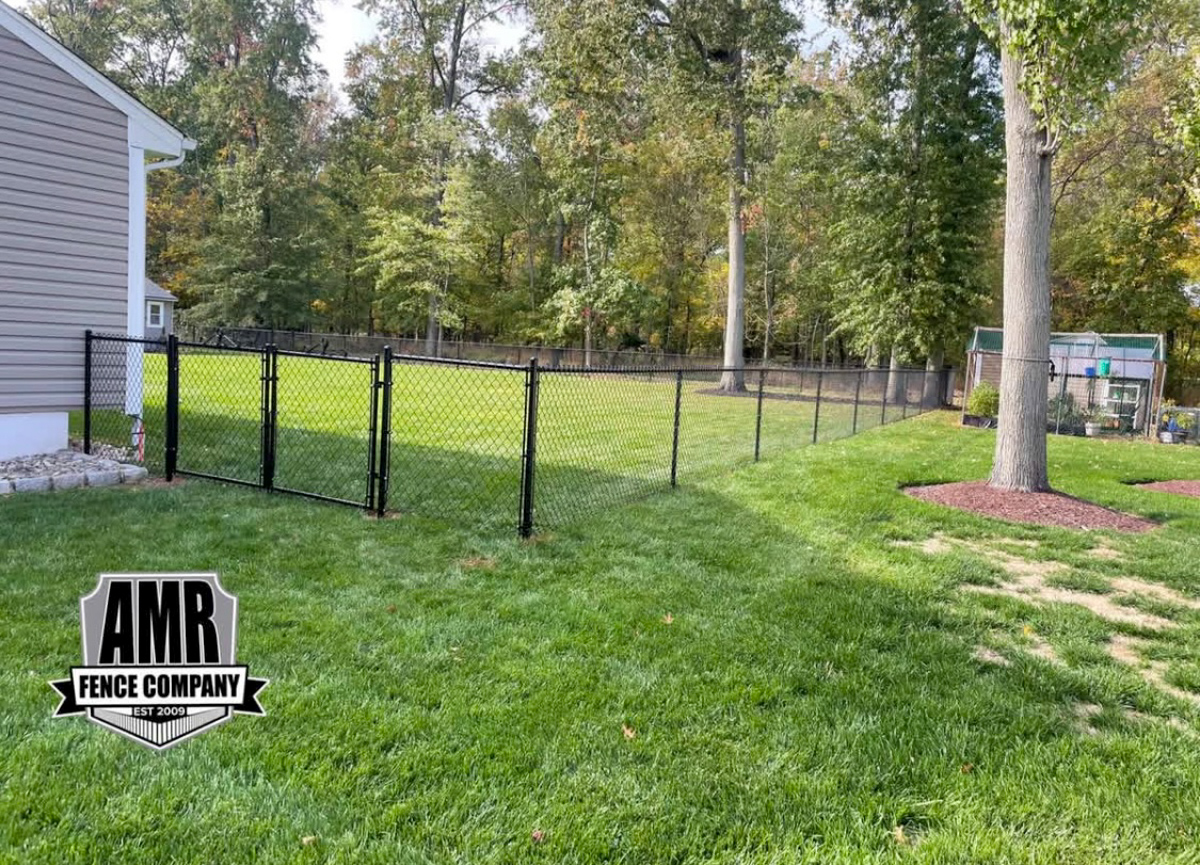
- Vinyl-coated fabric. Black chain link reads as a much cleaner, more finished look than bare galvanized, and it tends to disappear against landscaping. For residential yards, this is the upgrade we recommend most often.
- Bottom tension wire or bottom rail. If you have dogs that push or dig at the base of the fence, reinforcing the bottom keeps the fabric tight and makes it harder to squeeze under.
- A wider gate than you think you need. If there’s any chance you’ll need to bring a mower, tractor, or small equipment into the yard, sizing the gate correctly now is far cheaper than replacing it later.
Worth Considering Case by Case
- Privacy slats. Slats add screening, but they also add cost and catch more wind. If privacy is the main goal, it’s worth comparing slatted chain link against our other residential fencing options.
- Heavier commercial gauge on a residential fence. Unless you’re fencing in large animals or a high-impact area, standard residential gauge is usually plenty.
- Gate automation. For commercial lots and long driveways, an automatic opener can be a real convenience and security upgrade. Our driveway gate automation page explains how those systems work with chain link and other gate types.
Chain Link Fence Cost Checklist: Questions to Ask Before You Sign
Before you compare quotes or commit to a project, run through these questions with any fence company you’re considering:
- What gauge fabric and what coating are included?
- Are posts set in concrete, and how deep?
- Is there a top rail, bottom rail, or tension wire?
- How many gates are included, and how wide are they?
- Does the price include removal and disposal of the old fence?
- Who handles the permit, and is the permit fee listed separately?
- Will your own crew do the installation, or will the job be subcontracted?
- Is the company licensed, bonded, and insured in New Jersey?
Getting clear answers to these questions puts every quote on equal footing and helps you avoid surprises once the work starts. For us, the answers are simple: no hidden fees, our own crew on every job, and a license number you can look up (NJHIC #13VH10878100). If spreading out the cost would help, our fence financing options are worth a look as well.
Get a Free Estimate for Your Chain Link Fence
The only way to get a real number for your chain link fence is to have someone walk the property, measure the fence line, and look at the ground you’re building on. That’s exactly what our free on-site estimates are for. Whether you’re fencing a backyard for the dog or securing a commercial lot, we’ll talk through gauge, height, coating, and gate options, then give you a clear quote with nothing hidden. Our family has been building fences for three generations, and every job is handled by our own crew from the first post to the final cleanup. Ready to see what your project will cost? Get a free estimate from AMR Fence Company today.
Ready to Talk Fences?
When you’re ready to move from planning to building, AMR Fence Company is here to help. Our family-owned team handles every job from start to finish, and your free on-site estimate comes with honest advice and a straight quote.
Like this article? Spread the word!
Related Posts

How Much Does a Wood Fence Cost in NJ? Cedar Fence Pricing Factors
What does a wood fence cost in NJ? See how cedar, style, height, and slopes affect…

Vinyl Fence Cost in NJ: A Pricing Guide from AMR Fence Company
What drives vinyl fence cost in NJ? Style, height, terrain, and gates explained for…

What Does an Aluminum Fence Cost in New Jersey?
What drives aluminum fence pricing in Morris, Hunterdon, Somerset & Warren County —…